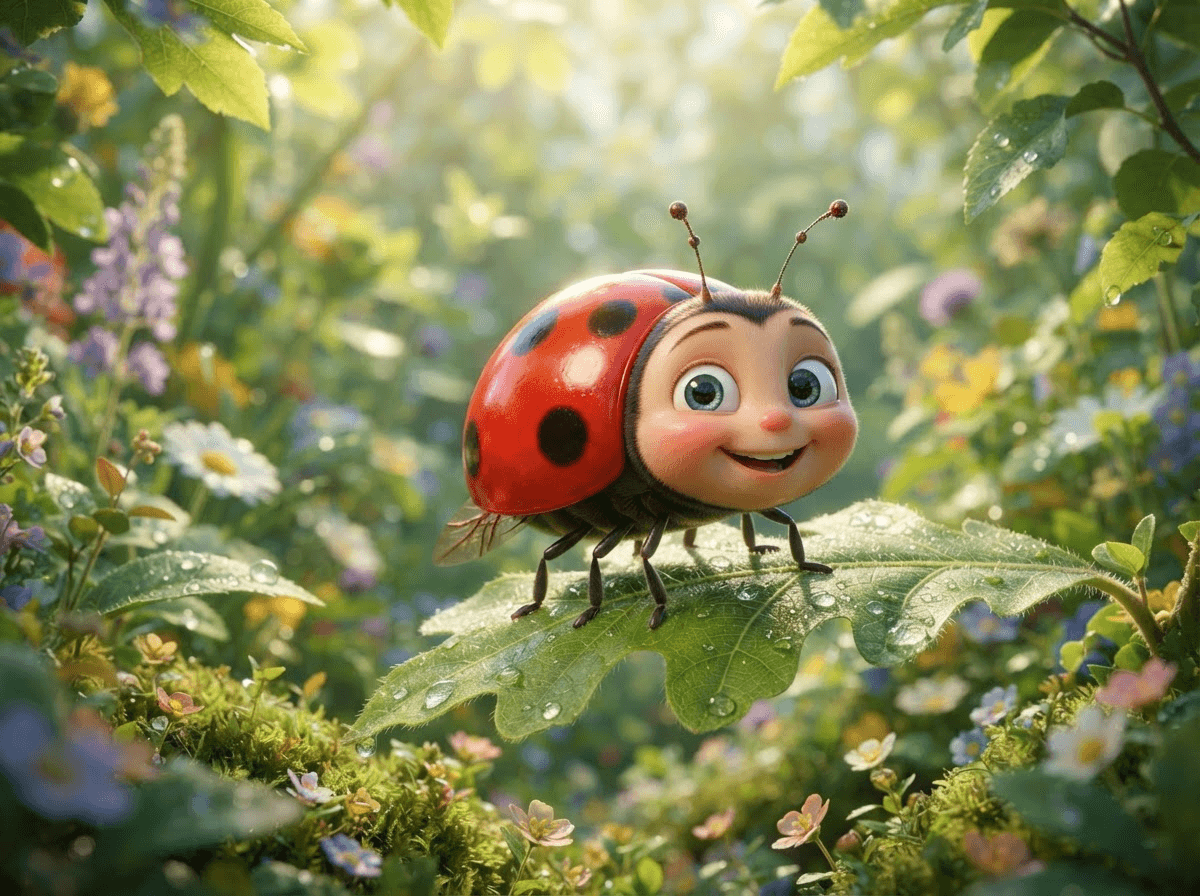
The ladybugs you meet on plants are often aphid specialists. Aphids are soft little sap-suckers that crowd stems. A hungry adult ladybug can eat many in a day. The spiky-looking baby, called a larva, can eat even more. Many kinds also snack on mites, scale insects, and insect eggs. A few kinds prefer pollen or even fungus. So "ladybug" is a family with different menus. The red garden helper in picture books is usually on the aphid team.
•Aphids are the famous favorite.
•Larvae hunt pests too, sometimes more than the adults.
•Not every species eats the same food.
Aphids
Favorite hunt
Beetle
Insect group
Spots
Species clue, not age
Elytra
Hard wing covers
Are ladybugs beetles?
Yes. The hard shiny part on the back is a pair of wing covers called elytra. They lift so the real flight wings can unfold. Beetles are insects with that extra armor. Ladybugs are the spotted, often round members of that club. Some people say ladybird or lady beetle. Same insect idea.
Do more spots mean an older ladybug?
No. Spot count and pattern depend on the species, not birthday candles. A two-spot and a seven-spot are different kinds, not different ages. Color can vary too. Red is common. Yellow, orange, and even some darker coats show up.
Can ladybugs fly?
Yes. The spotted covers open. The hidden wings fan out. Then they take off. That is how they find a new plant full of aphids. That is also how they leave when a garden gets cold.
In Giant
Giant is the app for curious kids
Kids talk with characters, create adventures, and discover how the world works.